
Skip to Content
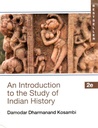
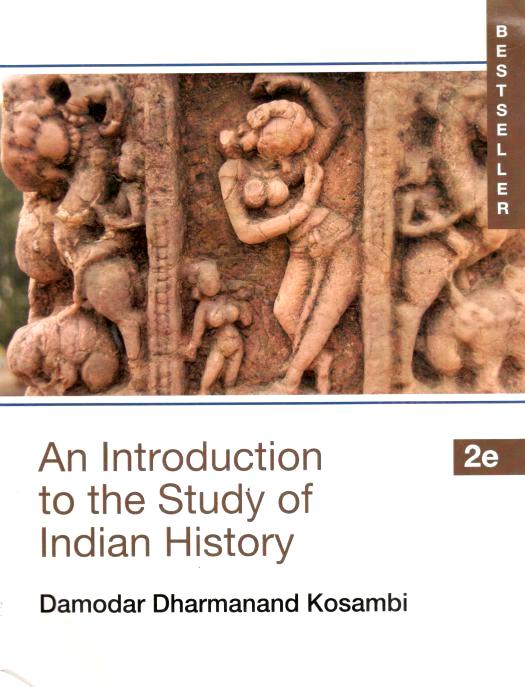
An Introduction to the Study of Indian History

Price:

891.00 ৳


আত্মদর্শন
আত্মদর্শন
636.00 ৳
795.00 ৳ (20% OFF)
Dhaka From City to Megacity
1,196.00 ৳
1,495.00 ৳ (20% OFF)

An Introduction to the Study of Indian History

An Introduction to the Study of Indian History is a reprint of the second revised edition of a great work on Indian history. A fundamentally new approach to the study of Indian History, its scientific methodology, modern technique of interpretation, selection and analysis of basic problems make the presentation vivid and absorbing. The fruit of patient research and the mature reflection of a profoundly original mind, this volume is one of his major works ? a scientific synthesis gained by unremitting search for fact and meaning. It is no exaggeration to state that this work on Indian history has earned universal recognition and honour. About The Author: Damodar Dharmananda Kosambi (July 31, 1907?June 29, 1966) was an Indian mathematician, statistician, Marxist historian, and polymath who contributed to genetics by introducing Kosambi's map function. He is well-known for his work in numismatics and for compiling critical editions of ancient Sanskrit texts. His father, Dharmananda Damodar Kosambi, had studied ancient Indian texts with a particular emphasis on Buddhism and its literature in the Pali language. Damodar Kosambi emulated him by developing a keen interest in his country's ancient history. Kosambi was also a Marxist historian specializing in ancient India who employed the historical materialist approach in his work. He is described as "the patriarch of the Marxist school of Indian historiography".Kosambi was critical of the policies of then Prime Minister Jawaharlal Nehru, which, according to him, promoted capitalism in the guise of democratic socialism. He was an enthusiast of the Chinese revolution and its ideals, and, in addition, a leading activist in the World Peace Movement. In the opinion of the historian Irfan Habib, "D. D. Kosambi and R.S. Sharma, together with Daniel Thorner, brought peasants into the study of Indian history for the first time."
See More
https://pathakshamabesh.com/web/image/product.template/50999/image_1920?unique=0c38bcb

891.00 ৳ 891.0 BDT 990.00 ৳

Not Available For Sale

(10% OFF)

This combination does not exist.

An Introduction to the Study of Indian History is a reprint of the second revised edition of a great work on Indian history. A fundamentally new approach to the study of Indian History, its scientific methodology, modern technique of interpretation, selection and analysis of basic problems make the presentation vivid and absorbing. The fruit of patient research and the mature reflection of a profoundly original mind, this volume is one of his major works ? a scientific synthesis gained by unremitting search for fact and meaning. It is no exaggeration to state that this work on Indian history has earned universal recognition and honour. About The Author: Damodar Dharmananda Kosambi (July 31, 1907?June 29, 1966) was an Indian mathematician, statistician, Marxist historian, and polymath who contributed to genetics by introducing Kosambi's map function. He is well-known for his work in numismatics and for compiling critical editions of ancient Sanskrit texts. His father, Dharmananda Damodar Kosambi, had studied ancient Indian texts with a particular emphasis on Buddhism and its literature in the Pali language. Damodar Kosambi emulated him by developing a keen interest in his country's ancient history. Kosambi was also a Marxist historian specializing in ancient India who employed the historical materialist approach in his work. He is described as "the patriarch of the Marxist school of Indian historiography".Kosambi was critical of the policies of then Prime Minister Jawaharlal Nehru, which, according to him, promoted capitalism in the guise of democratic socialism. He was an enthusiast of the Chinese revolution and its ideals, and, in addition, a leading activist in the World Peace Movement. In the opinion of the historian Irfan Habib, "D. D. Kosambi and R.S. Sharma, together with Daniel Thorner, brought peasants into the study of Indian history for the first time."

Title

An Introduction to the Study of Indian History

Publisher

Popular Prakashan Pvt. Ltd

Number of Pages

230

Language

English (US)

Category

  • History
  • First Published

    JAN 2024

    Delivery Charge (Based on Location & Book Weight)

     Inside Dhaka City: Starts from Tk. 70 (Based on book weight)

     Outside Dhaka (Anywhere in Bangladesh): Starts from Tk. 150 (Weight-wise calculation applies)

     International Delivery: Charges vary by country and book weight — will be informed after order confirmation.

     3 Days Happy ReturnChange of mind is not applicable

     Multiple Payment Methods

    Credit/Debit Card, bKash, Rocket, Nagad, and Cash on Delivery also available. 

    An Introduction to the Study of Indian History is a reprint of the second revised edition of a great work on Indian history. A fundamentally new approach to the study of Indian History, its scientific methodology, modern technique of interpretation, selection and analysis of basic problems make the presentation vivid and absorbing. The fruit of patient research and the mature reflection of a profoundly original mind, this volume is one of his major works ? a scientific synthesis gained by unremitting search for fact and meaning. It is no exaggeration to state that this work on Indian history has earned universal recognition and honour. About The Author: Damodar Dharmananda Kosambi (July 31, 1907?June 29, 1966) was an Indian mathematician, statistician, Marxist historian, and polymath who contributed to genetics by introducing Kosambi's map function. He is well-known for his work in numismatics and for compiling critical editions of ancient Sanskrit texts. His father, Dharmananda Damodar Kosambi, had studied ancient Indian texts with a particular emphasis on Buddhism and its literature in the Pali language. Damodar Kosambi emulated him by developing a keen interest in his country's ancient history. Kosambi was also a Marxist historian specializing in ancient India who employed the historical materialist approach in his work. He is described as "the patriarch of the Marxist school of Indian historiography".Kosambi was critical of the policies of then Prime Minister Jawaharlal Nehru, which, according to him, promoted capitalism in the guise of democratic socialism. He was an enthusiast of the Chinese revolution and its ideals, and, in addition, a leading activist in the World Peace Movement. In the opinion of the historian Irfan Habib, "D. D. Kosambi and R.S. Sharma, together with Daniel Thorner, brought peasants into the study of Indian history for the first time."
    No Specifications